
In aviation and space exploration, cutting structural weight is the only way to boost fuel efficiency and maximize payload capacity. Hitting these aggressive weight targets requires highly specialized manufacturing strategies, which is exactly why aerospace CNC machining relies on advanced materials and complex cutting techniques.
Let’s explore how mastering exotic alloys, utilizing thin-wall machining, and maintaining strict quality standards make lightweight flight hardware a reality.
Advanced Alloys and the Problem of Distortion
Modern aerospace engineering depends on high-strength-to-weight alloys like Aluminum-Lithium, Titanium, and AlBeMet. While these materials deliver exceptional performance, they are notoriously difficult to machine.
Heavy material removal often releases internal stresses trapped inside the raw stock, causing thin-walled parts to warp or twist during the cut. Overcoming this requires a highly controlled approach:
- Thermal management:Controlling heat dissipation is vital to prevent thermal distortion in thin-section components.
- Advanced toolpaths:Machinists must use precise cutting paths and specialized cooling strategies to keep the workpiece stable.
- Strategic stock selection:Choosing the optimal raw stock size from the start minimizes residual stress and cuts down on material waste.
WessDel routinely achieves tolerances down to ±0.0002″ for specific complex features. Maintaining this level of accuracy on lightweight, thin-walled structures requires deep technical expertise and strict environmental controls.
The Evolution of Weight-Reduction Techniques
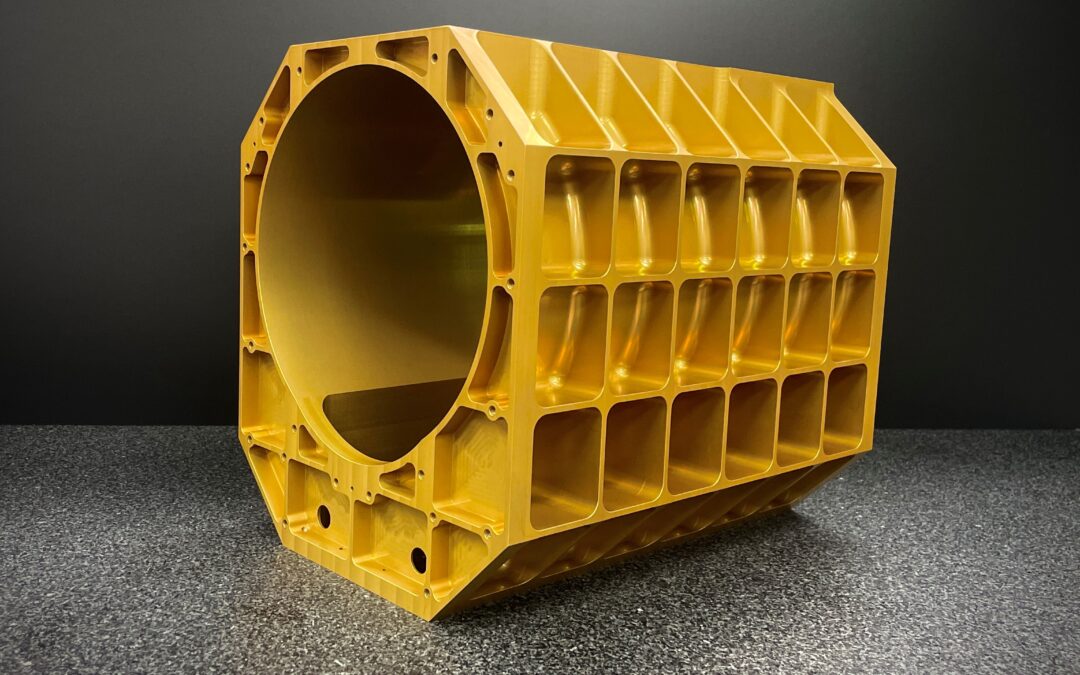
Structural flight hardware has largely moved away from heavy, riveted assemblies. Instead, engineers rely on aggressive pocketing to carve monolithic components out of single metal blocks.
This process leaves behind thin, lightweight structural ribs, but it’s a difficult balancing act. If a wall is machined too thin, it will flex under the pressure of the cutting tool. Advanced CNC setups solve this by giving shops the precise control needed to successfully machine the intricate, web-like geometries that maximize stiffness while stripping out every unnecessary gram.
How to Manage High Aerospace Standards and Quality Control
Aerospace CNC machining demands a strict “zero-defect” mentality. Every single component must comply with rigorous international and defense regulations:
Compliance
Maintaining full AS9100D and ISO 9001:2015 registration ensures that all manufacturing controls meet stringent aviation criteria.
Testing
Implementing Non-Destructive Testing (NDT), such as dye penetrant or ultrasonic inspection, verifies that aggressive machining did not introduce micro-cracks.
Traceability
Providing full lot traceability and First Article Inspection (FAI) reports guarantees the integrity of the material from the raw mill to the final component.
Collaborating for Mission-Critical Supply Chains
Optimizing the buy-to-fly ratio requires early collaboration. Working directly with manufacturing engineers during the design phase eliminates unnecessary machining complexities.
You also need stable supply chains for specialized materials like beryllium or titanium. Standard aerospace project lead times typically run 10-12 weeks. However, complex parts requiring exotic materials extend to 20+ weeks. WessDel excels in aerospace CNC machining. We provide the technical expertise required to manufacture complex structures for the next generation of space and aviation.
Contact WessDel for Aerospace CNC Machining
Building next-generation flight hardware requires a manufacturing partner that understands lightweight design challenges. At WessDel, we provide the precise multi-axis machining, advanced material capabilities, and rigid quality systems your mission demands.
Contact us for aerospace CNC machining today to discuss your structural weight-reduction goals.