
Maintaining aging industrial infrastructure often comes down to a single point of failure: finding replacement parts. When an OEM drops support for older hardware or goes out of business entirely, production stalls while teams scramble for a fix. Without original blueprints or documentation, a single worn or broken component can halt an entire production process.
Reverse engineering combined with CNC machining solves this outright. By extracting exact measurements directly from your existing component, we build precision replacements that extend your machinery’s working life.
Bridging the Documentation Gap
When an active manufacturer no longer supports a machine, finding off-the-shelf replacements becomes nearly impossible. Hunting through secondary suppliers or applying quick field patches usually results in bad fits and endless repeat breakdowns.
Reverse engineering solves this problem by using the physical component itself as the blueprint. Instead of relying on missing paper drawings, engineers capture the precise measurements of the worn or damaged part to recreate an accurate digital model. This process restores missing technical specifications and creates a permanent digital file for future manufacturing needs.
Precise Data Capture and Metallurgical Analysis
Rebuilding an obsolete part without blueprints takes precise measurement and physical analysis. The process generally breaks down into three steps:
- Geometric Scanning: High-accuracy 3D laser scanners and Coordinate Measuring Machines (CMM) record millions of data points across the part’s surface. This captures tight tolerances, complex contours, and critical interfaces.
- CAD Reconstruction: Engineers convert raw point-cloud data into parametric 3D CAD models. During this step, wear and damage are corrected to restore the part to its original design intent.
- Material Identification: Spectroscopy and metallurgical testing determine the exact alloy composition and hardness. This ensures the replacement part matches or exceeds the thermal and mechanical properties of the original.
Getting the alloy right is essential, particularly for exotic metal manufacturing. If a part operates under extreme heat, high stress, or corrosive environments, matching the original material properties is non-negotiable.
Precision Machining and Modern Component Optimization
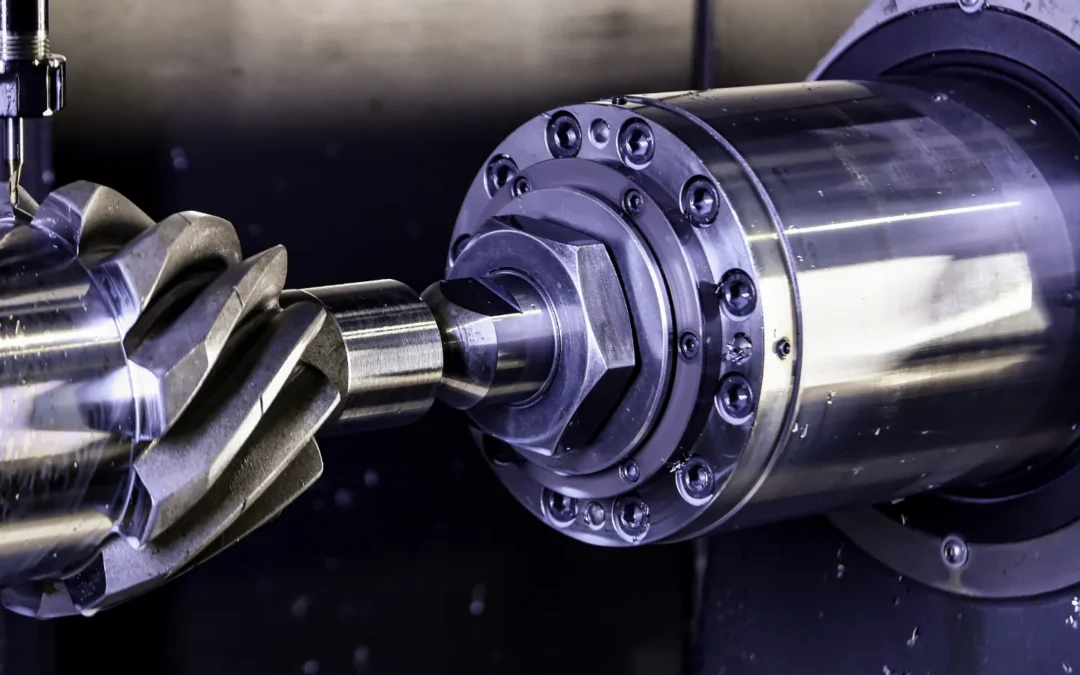
Once the 3D model and material profile are complete, the digital file moves to modern CNC machining equipment. Engineers generate optimized toolpaths to deliver exact tolerances and smooth surface finishes.
This transition from legacy hardware to digital manufacturing also creates opportunities for design improvements. Legacy components can often be optimized using stronger alloys, modified features, or superior surface coatings to extend service life and improve performance.
The final part undergoes thorough quality inspection to ensure seamless integration into the existing assembly.
Contact WessDel for Reverse Engineering CNC Manufacturing
WessDel delivers complete engineering and precision machining services to reproduce obsolete components for high-value applications. By combining precise metrology, modern CAD modeling, and advanced multi-axis machining, WessDel produces exact replacements and upgraded components built to perform.
Don’t let missing OEM parts sit on your critical path. Contact WessDel today to talk through your reverse engineering and machining options.