
Keeping legacy systems running today is about more than just swapping out a broken part; it is a deep dive into the unique history of how those components were originally crafted. When providing reverse engineering services for assemblies built from a mix of materials, the real challenge lies in the synergy between different elements, like metals, ceramics, and composites, ensuring they work together as one cohesive unit.
The Difficulty of Multi-Material Replication
Making an exact copy of an older component is seldom a simple chore. These assemblies typically feature a complex mix of varied metals, specialized ceramics, and advanced composites. Because each material reacts uniquely to things like light, touch, and radiation, applying a single measurement method is simply not possible.
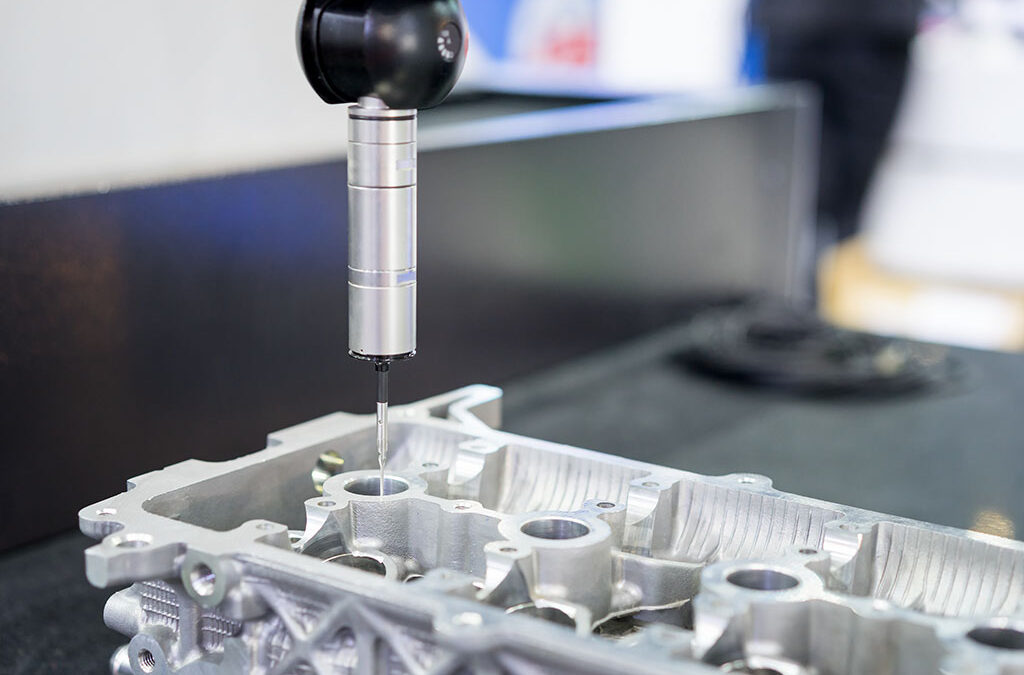
Achieving high precision demands a strategy that uses multiple techniques: Coordinate Measuring Machines (CMM) work best for the touchable surfaces of metal, while X-ray or CT scanning is often necessary to see inside the complicated inner workings of a part. Moreover, the places where these materials join, like braze joints or thermal bonds, pose a significant challenge. These transition areas complicate both the measurement process and the final plan for replication, especially since original bonding methods may no longer have documentation.
Integrated Data Capture and Analysis
To successfully rebuild a component, the initial step is to establish its “material fingerprint.” WessDel, with our partners, achieve this by bringing together high-resolution 3D scanning with metallography and chemical analysis. We make sure the replacement part is not just a match in shape, but a metallurgical twin as well.
Our procedure captures both the exterior shapes and any hidden internal features, such as elaborate cooling channels or hollow centers. Once the information is gathered, we use Finite Element Analysis (FEA) during the design and modeling phase. That practice enables our engineers to run simulations of the replicated part’s performance under operational stress, confirming it will meet or even surpass the mission-critical needs of the original hardware.
Mitigating Assembly and Interface Risk
One of the largest risks in reverse engineering services is properly handling how parts fit together during the re-manufacturing process. It requires specialized fixtures and custom holding tools to keep everything in precise alignment while the new assembly is constructed.
Current engineering knowledge allows engineers to actively design out known weak points from the old design. By applying better joining techniques, such as vacuum brazing, they can often create a connection that is stronger and more dependable than the original, older method. Engineers can also establish new, very strict tolerance standards. These standards specifically account for the ways dissimilar materials expand and contract with heat, which ensures the final assembly remains stable throughout high-temperature or high-pressure operations.
Single-Source Manufacturing for Complex Assemblies
The greatest benefit when tackling a reverse engineering project comes from choosing a single-source partner. Sending a reverse-engineered design from a design office to a completely separate machine shop often results in translation errors that compromise the final quality.
By selecting a partner that handles both the initial technical analysis and the final high-precision manufacturing, you guarantee complete continuity. WessDel provides certified, in-house capabilities for both machining exotic metals and advanced joining. The benefit of an integrated approach allows us to maintain rigorous quality control from the very first scan all the way to the final inspection.
Contact WessDel for Reverse Engineering Services
Conquering the complexities of multi-material assemblies requires a manufacturing partner with deep technical expertise. WessDel provides comprehensive reverse engineering services for your most challenging, mission-critical hardware.
Contact us today to discuss how our integrated analysis and precision manufacturing can restore your legacy systems with reliability.