The Signs of a Professional Titanium CNC Machining Services Provider

Titanium is a material prized for its exceptional strength-to-weight ratio and resistance to corrosion, making it crucial for demanding applications in aerospace, defense, medical, and semiconductor industries. Its inherent hardness and thermal properties present unique machining challenges. Identifying a professional titanium CNC machining services provider will help ensure your critical components’ precision, quality, and reliability.
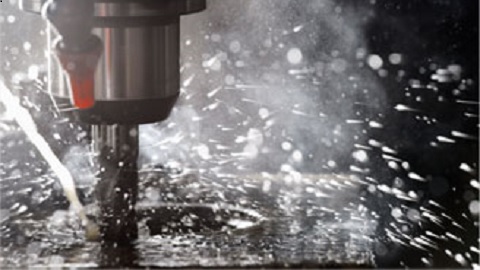
Specialized Expertise and Experience

A hallmark of a professional titanium CNC machining service is its deep understanding and extensive experience working with this material. They will have advanced techniques honed over years of tackling titanium’s machining complexities. Providers like WessDel, with nearly 50 years in precision machining, demonstrate this specialized expertise, which is particularly valuable in high-stakes industries.

Advanced Machining Capabilities

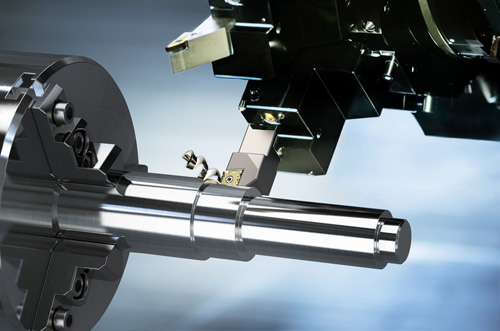
Working with titanium demands sophisticated equipment and processes. A professional provider will utilize cutting-edge CNC machining centers, including multi-axis milling (4-axis and 5-axis), turning centers, waterjet cutting, and electrical discharge machining (EDM). These technologies allow for intricate designs and the tight tolerances required for titanium components. WessDel’s state-of-the-art, temperature-controlled 24,000-square-foot facility exemplifies this commitment to advanced capabilities.
Focus on Precision and Quality Standards

In industries where titanium components are mission-critical, precision and quality are non-negotiable. A professional machining service adheres to stringent industry standards such as ANSI, ASME, ASTM, Mil-Spec, and RoHS compliance. Furthermore, certifications like AS9100D and ISO 9001:2015 demonstrate a commitment to consistent quality control throughout their operations. WessDel’s dedication to achieving tolerances as precise as 0.0002 inches underscores this focus.

Tailored Solutions and Collaborative Engineering

Complex projects involving titanium benefit from early collaboration between the customer and the machining provider. A professional service offers concurrent engineering support, working with clients during the design phase to ensure manufacturability and optimize component performance. This proactive approach is crucial for mission-critical applications where failure is not an option. WessDel’s customized solutions for complex projects highlight this collaborative spirit.

Commitment to High-Performance Industries

A professional titanium CNC machining provider understands the unique demands of industries that rely on titanium’s properties. We tailor our processes and expertise to meet the stringent requirements of aerospace, defense, semiconductor, and medical sectors. Our ability to handle prototyping and full-scale production makes us valuable partners. WessDel’s focus on these high-performance industries demonstrates this alignment.
Innovative Manufacturing Practices

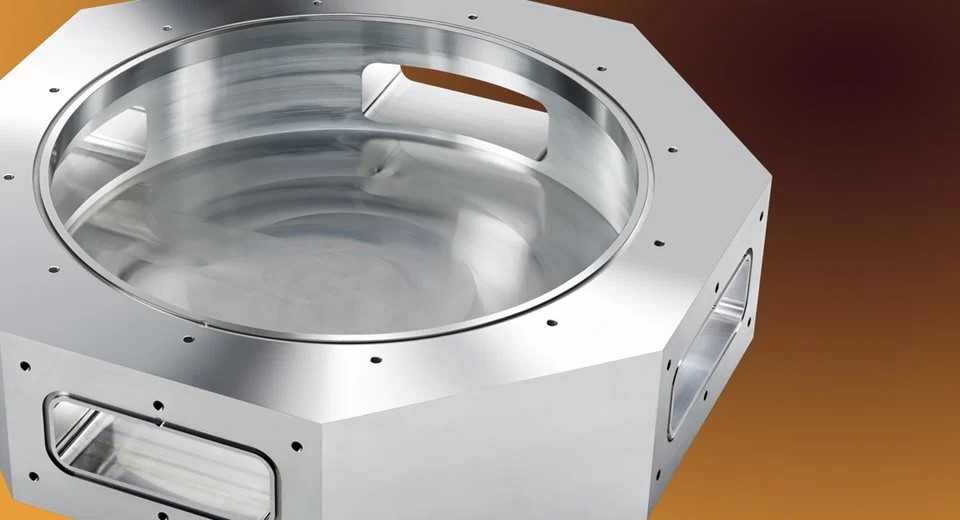
Efficiency and quality go hand-in-hand in professional machining. Providers that implement lean manufacturing techniques and advanced process controls ensure both. A commitment to innovation, including exploring new machining techniques to overcome the challenges associated with titanium, further distinguishes a top-tier service. WessDel’s dedication to innovative manufacturing practices reflects this forward-thinking approach.

Titanium Machining FAQs

What makes titanium so difficult to machine?

Titanium is challenging to machine due to its low thermal conductivity and strong reactivity with cutting tools. Heat builds quickly, causing work hardening and rapid tool wear, which can compromise dimensional accuracy if not carefully managed.

We leverage more than 50 years of experience and specialized equipment, including advanced titanium CNC milling machines. Our machinists balance speed and feed for titanium machining, maintain rigid setups, and use high-pressure coolant to evacuate chips. This approach ensures tools stay cool and parts meet precise tolerances, making our titanium machining services highly reliable.

What speeds and feeds should be used when machining titanium?

Many machinists start around 200 surface feet per minute (SFM) and adjust feed per tooth depending on tool diameter, flute count, and titanium grade. Multi-flute carbide endmills with moderate chip loads are recommended, and radial step-over and depth of cut should be monitored to control heat and tool deflection.

We use advanced CAM software and titanium CNC milling machines to calculate optimal speeds and feeds for each job. By fine-tuning these, we ensure efficient chip evacuation, extended tool life, and consistent quality in every titanium part we produce.

What are the common applications of machined titanium parts in aerospace, automotive, and other industries?

Titanium’s high strength-to-weight ratio, corrosion resistance, and biocompatibility make it ideal for demanding applications across aerospace, defense, and automotive industries. Typical components include airframe structures, engine parts, high-performance automotive brackets, compressors, and pressure vessels. Other sectors, such as energy and power generation, medical devices, oil and gas, and shipbuilding, also rely on titanium for its strength, durability, and reliability.

Our titanium machining services produce precision parts tailored to these applications. Using CNC precision machining and comprehensive engineering support, we deliver components with tight tolerances and consistent quality. From aerospace platforms and medical implants to high-performance industrial equipment, we ensure titanium components meet rigorous standards for reliability and material performance.

How can you hold tight tolerances when milling titanium?

Maintaining tight tolerances on titanium requires slow speed, high-feed finishing passes, high coolant flow, and sharp cutting tools. Rigid fixturing and careful control of tool deflection are essential, and roughing, semi-finishing, and finishing strategies allow gradual, controlled material removal.

Our precision CNC equipment and experienced programmers plan multistage operations for titanium CNC machining. By combining proper fixturing, optimized speed and feed, and precise tool paths, we ensure final parts meet or exceed the stringent tolerance requirements for aerospace and defense applications.

Why is tapping or threading titanium particularly challenging, and how do you manage it?

Tapping or threading titanium is especially challenging because the material tends to grab the tap immediately, which can cause tool breakage, poor thread quality, or inconsistent dimensions. Titanium’s strength and work-hardening behavior mean that traditional threading methods often fail unless specialized tooling and careful planning are used. Form/roll taps or thread milling operations help improve chip control and ensure consistent thread quality.

WessDel mitigates these challenges with precision titanium machining services. We use purpose-built taps, precise hole sizing, and thread milling when appropriate, combined with optimized feeds, speeds, and rigid fixturing. This approach ensures clean, high-quality threads for aerospace, automotive, and industrial titanium components. By integrating these practices with CNC precision machining services, we consistently produce reliable threaded titanium parts for critical applications.

Contact WessDel For Titanium CNC Machining Services

Ready to unlock the full potential of your titanium CNC machining projects? WessDel has been pushing the boundaries of precision with state-of-the-art equipment and has had an unwavering dedication to quality for nearly half a century. Let’s bring your most challenging designs to life. Contact WessDel online today or call (408) 496-6822

MSIRobot