
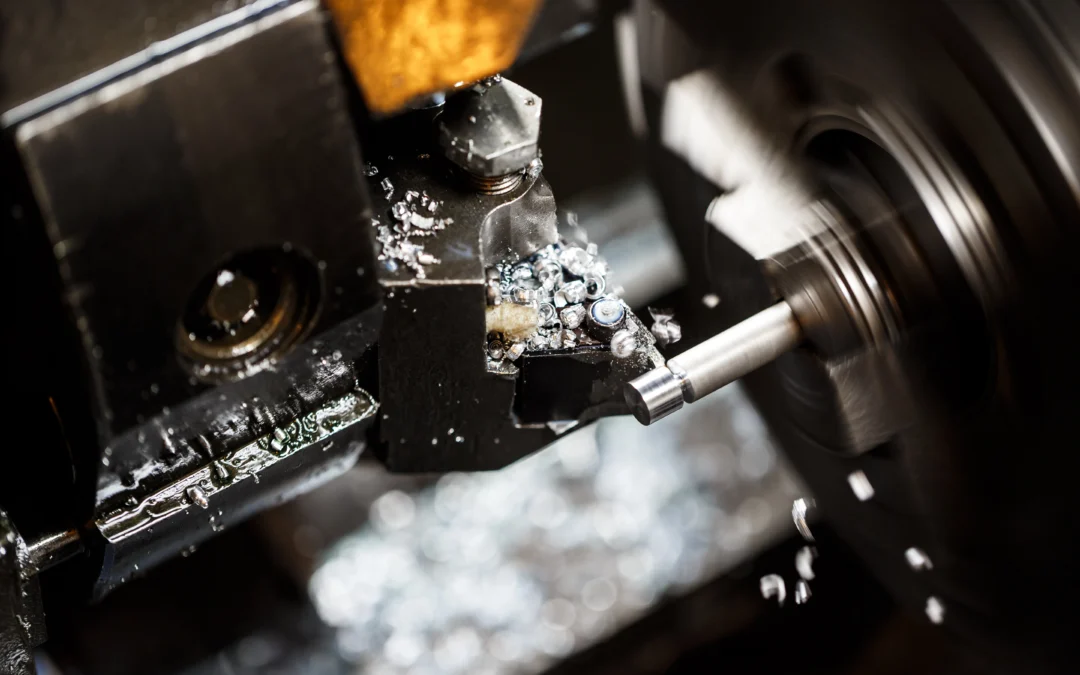
In high-stakes engineering, whether aerospace, defense, or other mission-critical sectors, precision matters. Every micron, material choice, assembly step, and process decision can determine whether a part performs flawlessly under extreme conditions or fails when it matters most.
Let’s explore how a disciplined, traceable, and integrated approach to precision component manufacturing takes a concept all the way to production-proof.
Process Development First
Before production begins, the manufacturing process must be understood, documented, and stabilized. That starts with locking in the machining order, tooling, and datums before parts ever hit the floor. Design intent can only be protected if the process is fixed, repeatable, and not open to interpretation.
Standard work instructions are then created with growth in mind. A process that works for one prototype but cannot be scaled forces costly reinvention. By designing for volume even at the development stage, production can expand without compromising precision.
PFMEAs (Process Failure Mode and Effects Analyses) are tied directly to controls so that every identified risk has a measurable safeguard. This ensures that quality is engineered into the workflow instead of being inspected after the fact.
Traceability That Protects Uptime
In regulated and mission-critical industries, traceability helps ensure compliance and operational stability. Complete documentation allows teams to respond quickly when questions arise, without shutting down production to search for answers.
- Digital revision control maintains alignment between part travelers, instructions, and released engineering. Operators always know they are building the correct version.
- Material certificates and heat-lot records track each part back to the original material source, supporting audits, supplier investigations, and corrective action.
- Full production and inspection history provides customers with a defensible record of how each component was manufactured.
With this structure in place, production uptime is protected, nonconformances can be isolated quickly, and customers have confidence in every delivered unit.
Assembly Integration
Precision parts usually function within larger systems, and assembly discipline determines long-term performance. Components are designed with joining requirements in mind, including brazing, bonding, or welding, and post-operation machining is planned to correct any thermal or structural movement that occurs during joining.
Sub-kits are built ahead of final assembly to remove line variability and simplify flow. Torque values, fits, and joint integrity are validated with real fixtures, not assumptions, ensuring that assemblies function reliably under actual operating loads. This approach removes guesswork and makes system-level quality repeatable.
WessDel’s Precision Component Model
WessDel offers machining, material processing, and precision mechanical assembly in a single workflow, supporting prototype development and full production programs. Work is done in advanced performance materials, including titanium, aluminum, magnesium, beryllium, and AlBeMet.
Our facility is temperature-controlled and equipped with multi-axis CNC machining, EDM, and waterjet capability. Quality systems are aligned to AS9100D and ISO 9001:2015, with documentation supporting traceability throughout the build process. Together, this structure enables customers to transition from concept to proven, stable production with confidence.
Partner with WessDel for Precision Component Manufacturing
If you’re looking for a precision machining and manufacturing provider capable of supporting aerospace, defense, precision energy products, and more, we’re ready to support you. Contact our team to discuss your project requirements and explore how WessDel can move you from design to production with confidence.