
In commercial and military aviation, the margin for error is non-existent. At cruising altitude, a single microscopic defect can compromise an entire aircraft, which is why the industry demands absolute manufacturing precision. Extreme temperature swings, aerodynamic forces, and intense pressure changes demand parts built to the most stringent engineering specifications.
Sourcing and shaping the advanced, lightweight materials required for next-gen aerospace designs call for specialized machining capabilities.
Achieving Micro-Precision with Multi-Axis Machining
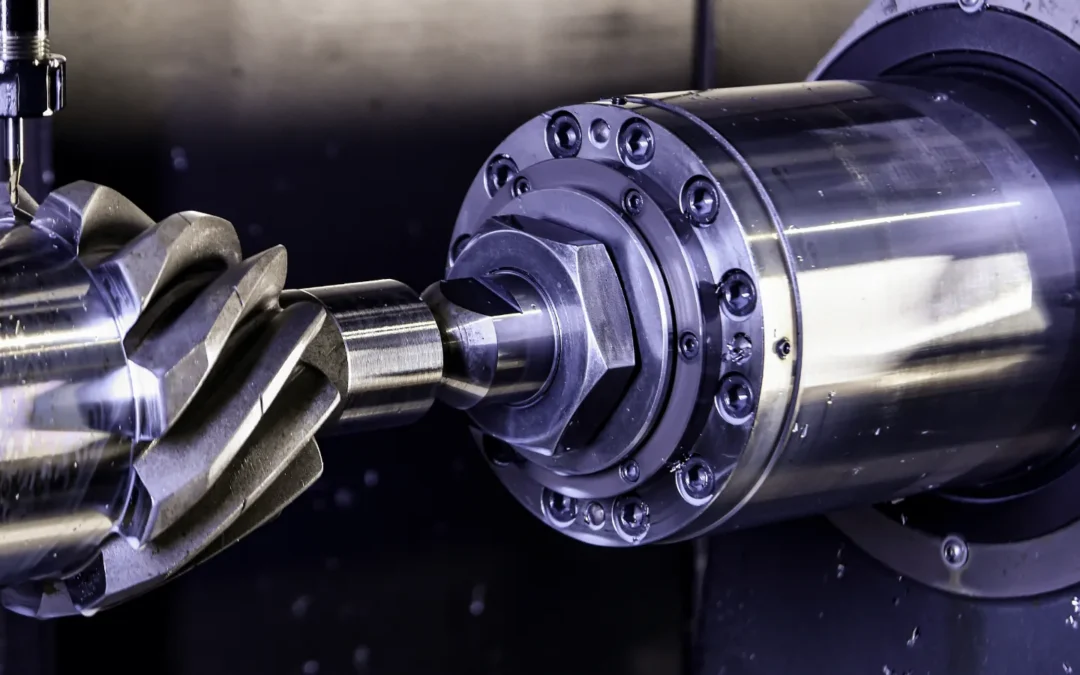
Conventional machining falls short when dealing with the complex, organic geometries of modern flight hardware. That’s where 5-axis aerospace CNC machining steps in. 5-axis CNC milling machines move cutting tools across five different axes simultaneously. This capability allows technicians to fabricate highly complex structural components in fewer setups.
- Tighter Tolerances: Multi-axis milling holds dimensions to within microns, satisfying the strict margins required for flight-critical systems.
- Reduced Human Error: Programmed, automated toolpaths run directly from CAD files. This automation keeps the manufacturing process repeatable and reliable.
- Production Efficiency: Fewer setups mean less manual repositioning, reducing the chance of alignment errors during production.
Managing Material Integrity and Surface Finishes
Selecting the correct superalloy is only the first step. Aerospace engineering utilizes advanced alloys like titanium, Inconel, and high-strength aluminum. These metals are notoriously difficult to cut. Standard machining can accidentally heat the metal too much or create internal physical stress. This can lead to microscopic cracks that weaken the part over time.
Because of this, experienced machinists use precise speed, feed, and cooling strategies to preserve the metal’s natural strength.
Surface finishing is just as important as the initial cut. Proper deburring, polishing, and specialized coatings ensure the final parts can handle friction and wear. A perfectly smooth surface finish lowers aerodynamic drag on external parts and prevents premature wear on moving internal systems.
Why Quality Standards Govern Flight
In aviation, consistency is everything. Manufacturers must adhere to strict international quality control frameworks to guarantee that every single part meets safety standards.
This is why working with an AS9100-certified aerospace machining partner is essential. The AS9100 standard builds upon standard ISO 9001 requirements, adding specific, stringent rules for the aviation, space, and defense industries. It requires complete traceability for all materials, detailed process validation, and rigorous inspection protocols.
For tier-1 aerospace contractors, these certifications are non-negotiable. They protect supply chains and ensure that every delivered component is safe for flight.
Contact WessDel for Aerospace CNC Machining Today
For high-stakes aviation programs, tier-1 contractors trust WessDel to deliver. We support your projects from early prototyping through full-scale production runs. Our facilities are equipped with multi-axis CNC technology and backed by a strict quality management system designed for high-stakes industries.
Let us help you execute your next aerospace project with absolute precision. Contact WessDel today to discuss your manufacturing specifications and discover our full suite of capabilities.