
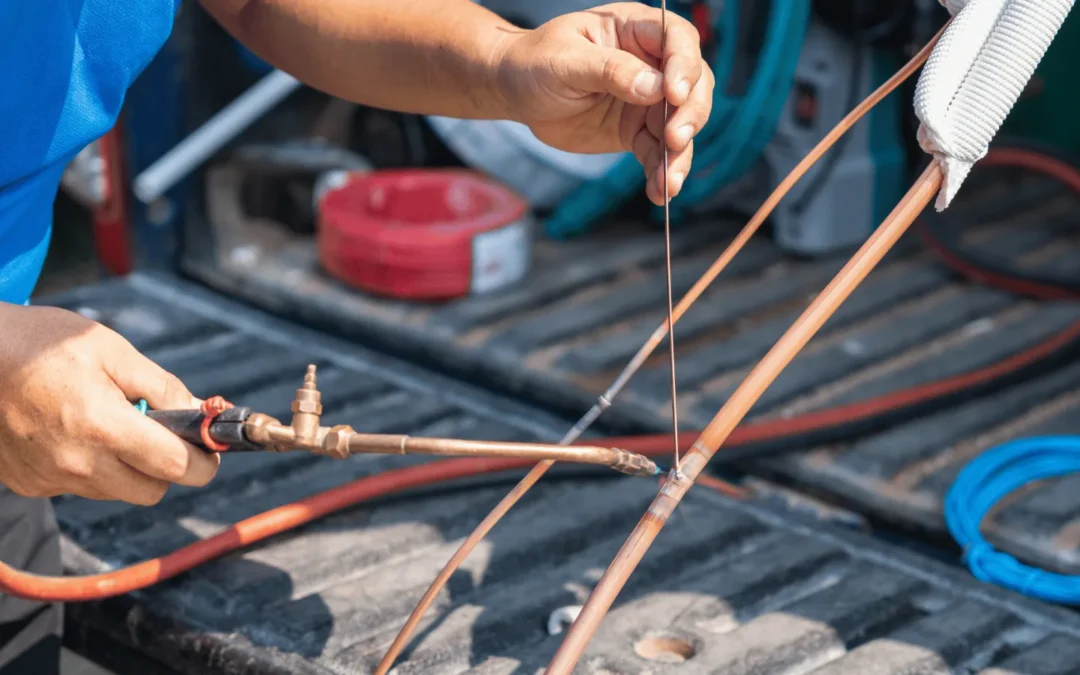
Finding the right brazing suppliers for critical industrial components requires evaluating more than just thermal capacity. In high-stakes fields like aerospace and defense, a brazed joint must perform flawlessly under extreme temperature and pressure. Choosing a precision joining partner directly impacts the structural integrity, lead times, and overall quality of your assemblies.
This buyer’s guide breaks down the essential factors to evaluate when selecting a supplier for complex metal-joining applications.
High-Strength Metal Joining: Beyond Standard Welding
Brazing creates high-strength, leak-tight joints by heating filler metal above its liquidus temperature, without melting the base materials. Capillary action draws the molten alloy into the tight space between components, bonding them together seamlessly.
This process provides distinct advantages over traditional welding:
- Dissimilar Metal Bonding: Joins materials with vastly different melting points, such as stainless steel to copper, without compromising joint integrity.
- Thermal Stress Reduction: Distributes heat evenly across the assembly, minimizing localized thermal distortion and preserving fine tolerances.
- Complex Assemblies: Seals multi-port fluid channels, heat exchangers, and vacuum enclosures in a single thermal cycle.
Non-Negotiable Supplier Capabilities
When auditing potential brazing suppliers, ensure they possess the necessary thermal processing technology and metallurgical expertise to prevent joint failure or contamination.
Vacuum and Controlled-Atmosphere Processing
Oxidation ruins brazed joints. High-vacuum and controlled-atmosphere furnaces pull oxygen out of the chamber, producing clean, bright parts without needing chemical flux.
Advanced Filler Metal Expertise
Verify that the supplier routinely works with high-performance alloys. Applications exposed to aggressive environments or extreme temperatures often require nickel-based or gold/silver precious metal filler alloys. Experienced metallurgists understand alloy wetting behavior and thermal expansion rates.
Inspection and Quality Protocols
Look for comprehensive pre-cleaning standard operating procedures (SOPs). Residual grease or oxides impair capillary flow. Post-braze evaluation should include leak testing (such as helium mass spectrometry) and non-destructive testing (NDT) to confirm zero voiding.
Eliminating Risk with Single-Source Manufacturing
Splitting machining and brazing across separate vendors introduces significant quality risks, extended lead times, and complex supply chain coordination.
A unified workflow yields major operational advantages:
- Optimized Joint Tolerances: Precision capillary action depends on exact joint gaps, often between 0.001 and 0.003 inches. A single-source provider machines components specifically to complement thermal expansion during brazing.
- Turnkey Accountability: Quality issues often lead to vendor finger-pointing between the machinist and the heat treater. Single-source manufacturing keeps full quality accountability under one roof.
- Shorter Lead Times: Removing transport legs between machine shops and heat treaters cuts weeks off production schedules.
Contact WessDel for Aerospace Brazing
WessDel combines precision CNC machining and controlled-environment furnace brazing in a single facility. We engineer specialized custom fixtures that maintain precise part alignment throughout the thermal cycle, delivering reliable results for demanding aerospace and high-vacuum applications.
Contact our engineering team today to discuss your project requirements and start building your next complex assembly with precision.